Progress on US-China Commitments, USCC Publishes Annual Report
This week, the United States and China continued to take action on commitments made during the leaders’ meeting in October.


Beijing is contemplating how to secure a foothold in the international monetary system as Washington pushes ahead with dollar-linked stablecoins to solidify the greenback’s dominance. Today’s total stablecoin market capitalization is roughly $265 billion, with US dollar-denominated stablecoins accounting for about 99% of the global market.
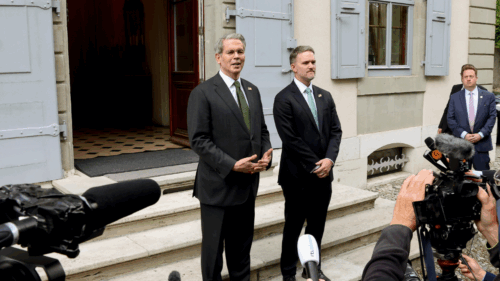
US and Chinese trade officials met in Stockholm over Monday and Tuesday and discussed extending the August 12 trade deal deadline another 90 days pending President Donald Trump’s approval. The president was due to be briefed on the meetings on Wednesday, but the White House has yet to announce a decision on the extension.
Since China’s creation of a rare earth elements (REEs) export control system on April 4, foreign companies have encountered delays in sourcing REEs and magnets from Chinese suppliers. USCBC conducted a flash survey in mid-July to gauge member companies’ experiences navigating the system.
Treasury Secretary Scott Bessent hinted on Tuesday that the August 12 deadline for bilateral trade negotiations is likely to be extended following discussions with Chinese counterparts in Stockholm over July 28 to 29. Bessent also noted that he hopes to discuss China’s “glut of manufacturing” and the need to focus on “a consumer economy,” as well as China’s purchases of Russian and Iranian oil.
Companies remain anxious over outstanding export approvals of dual-use items critical to their operations, even while approvals of items like rare earth magnets are picking up. At a recent closed-door meeting, USCBC learned that China’s Ministry of Commerce is exploring new procedures to ease delays.
In the first half of 2025, China achieved GDP growth of 5.2% year-over-year, slightly surpassing expectations. Growth was driven primarily by exports amid a prolonged housing slump, declining industrial demand, and subdued consumer confidence.
USCBC’s annual survey delves into the top challenges, opportunities, and priorities of US companies in China. Here are three themes that dominated the results this year.
Two major US semiconductor suppliers on Tuesday announced that US officials had given them permission to resume exporting advanced H20 and MI308 chips to China, reversing a ban imposed in April. In an interview on Tuesday, Treasury Secretary Scott Bessent suggested that the decision was part of trade talks in Geneva and London.
US-China relations and tariffs are the top concerns of US companies doing business in China. US-China relations continue to top the list of business challenges, and tariffs jumped from eighth to second place amid renewed trade frictions. Companies’ first priority for the bilateral negotiations that kicked off in May is tariff reduction.
President Donald Trump announced on Tuesday that the United States would impose 50% tariffs on copper and tariffs on pharmaceuticals, potentially at a rate of 200%. While Trump clarified on Wednesday that the copper tariffs begin August 1, the timeline for the tariffs on pharmaceuticals is less clear.