Progress on US-China Commitments, USCC Publishes Annual Report
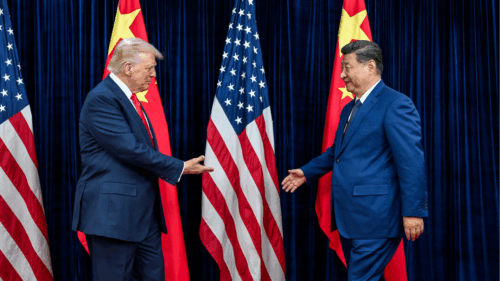
This week, the United States and China continued to take action on commitments made during the leaders’ meeting in October.


The United States and China are both taking concrete steps to implement the stability measures discussed by President Donald Trump and President Xi Jinping in South Korea last month.
This tracker monitors trade and economic actions between the United States and China from January 2025 to present. It documents tariffs, export controls, investigations, entity list additions, and other trade-related measures announced by both governments, providing announcement dates, effective dates, sources, and summaries of each action. The tracker is regularly updated to help members stay informed about the evolving US-China trade relationship.
The White House on Saturday published a fact sheet outlining the main components of the consensus reached between Presidents Donald Trump and Xi Jinping in South Korea last week. The document reaffirms commitments reported after the leaders’ meeting.
The United States and China have pulled back from a full-blown export control crisis after a presidential summit on the sidelines of the Asia-Pacific Economic Cooperation summit last month. According to both sides’ readouts, they agreed to a one-year, reciprocal truce: the United States will suspend its “50% Rule,” which extended export restrictions to over 20,000 Chinese entities, and in exchange, China will suspend the rare earth element (REE) export control measures announced by the Ministry of Commerce (MOFCOM) on October 9.
Last month, the Chinese Communist Party’s 20th Central Committee concluded its fourth plenary session, during which it adopted the Central Committee’s proposal for formulating the 15th five-year plan covering 2026 to 2030. Beijing has acknowledged a growing pressure to maintain social stability and advance reforms amid more volatile geopolitical conditions. As such, the proposal points to an enhanced role for indigenous innovation, industrial upgrading, and domestic consumption as key drivers of secure and sustainable growth.
This tracker monitors direct diplomatic interactions between the United States and China, documenting high-level meetings, phone calls, and official visits between American and Chinese government officials, starting with the second Trump administration.
Presidents Donald Trump and Xi Jinping on Thursday met in South Korea for their first in-person engagement of Trump’s second term. Trump called it a “truly great” meeting and emphasized the “enormous respect” between the United States and China. He fashioned the commitments made during the meeting as a one-year deal that the countries will re-negotiate annually.
Dr. Dan Wang is China director for Eurasia Group, specializing in China’s economy, industrial policy, and geopolitics. She previously served as the chief economist at Hang Seng Bank China based in Shanghai, responsible for macroeconomic forecasting and capital market analysis.
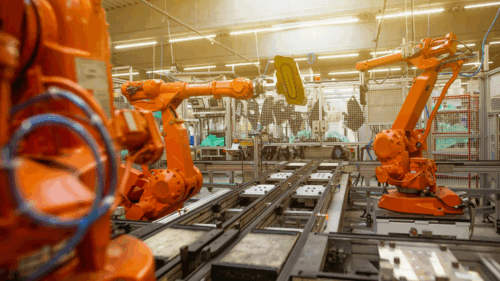
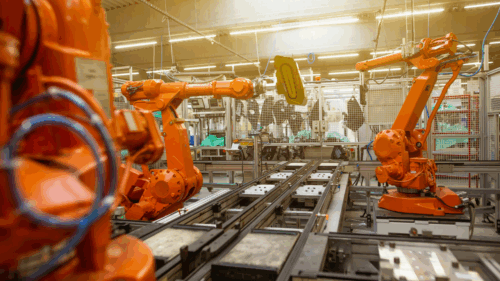
China’s factories are busy but not necessarily profitable. In the first eight months of 2025, industrial value-added rose 6.2% year-on-year, yet profits edged up just 0.9%. The wide gap between output and profitability reveals structural inefficiencies across China’s industrial sector, including persistent deflationary pressure, chronic oversupply, and stagnant productivity masked by volume growth. This misalignment threatens the sustainability of industrial recovery and undermines Beijing’s broader growth targets.