Progress on US-China Commitments, USCC Publishes Annual Report
This week, the United States and China continued to take action on commitments made during the leaders’ meeting in October.


Stephen Roach is an American economist. He serves as senior fellow at Yale Law School’s Paul Tsai China Center. He was formerly chairman of Morgan Stanley Asia and chief economist at Morgan Stanley, the New York City-based global investment bank. Roach’s current research program focuses on the impacts of Asia on the broader global economy.
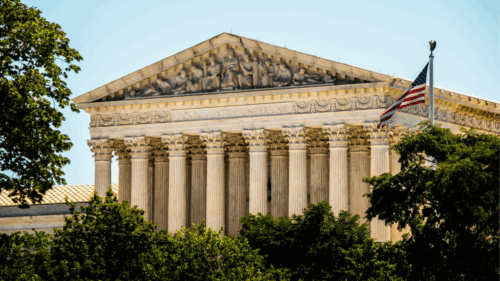
President Donald Trump on Wednesday asked the Supreme Court to rule on the legality of his tariffs. The request follows a federal appeals court ruling last Friday that the president lacks authority under the International Emergency Economic Powers Act to impose reciprocal and fentanyl-related tariffs.
Senior Chinese trade negotiator Li Chenggang is meeting with US government officials in Washington this week following the 90-day trade truce extension announced earlier this month. Li is expected to speak with deputies from the Treasury Department and the Office of the US Trade Representative (USTR). It is unknown whether discussions will include senior US officials.
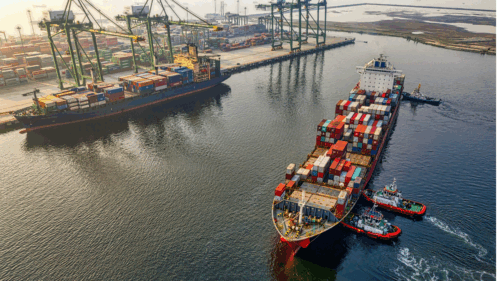
The Office of the US Trade Representative (USTR) is readying measures meant to revitalize US commercial shipbuilding, an industry the White House considers important to economic resilience and national security. The actions will include announcing new tariffs on Chinese-made maritime equipment and charging previously announced port fees on Chinese-linked ships.
President Donald Trump on Monday extended the US-China trade talks deadline until November 10. Existing baseline US tariffs on Chinese imports will remain at 30% (a 10% reciprocal tariff plus a 20% fentanyl tariff).
The administration has signaled that an extension to the August 12 tariff deadline will be announced soon following trade talks between US and Chinese officials in Stockholm last week. President Donald Trump indicated on Tuesday that he was “getting very close to a deal” with China to extend the deadline. USCBC understands that an executive order extending the deadline by 90 days has been drafted.
The US AI Action Plan is a strategic shift from the previous administration’s more restrictive AI Diffusion Rule to promoting the global export and adoption of American AI technology. The plan envisages a future in which the United States leads in developing and deploying AI globally, while restricting access for geopolitical competitors such as China.
Amid rising deflation and falling profits across industries, Beijing is intensifying efforts to rein in “involution-style” competition, or cutthroat price wars that sacrifice product quality and distort market order. At a July 1 Central Financial and Economic Affairs Commission meeting, President Xi Jinping emphasized the need to curb disorderly price competition, improve product quality, and phase out outdated production capacity.