Progress on US-China Commitments, USCC Publishes Annual Report
This week, the United States and China continued to take action on commitments made during the leaders’ meeting in October.


US-China bilateral trade in goods decreased by 2.9 percent year-on-year in Q1, despite US-worldwide trade increasing by 0.5 percent, the first such increase in US-worldwide trade since Q1 of last year. Bilateral trade has underperformed US-worldwide trade for the last three years due to shifts in trading patterns driven by economic and geopolitical factors.
On May 17, the People’s Bank of China (PBOC) introduced several new incentives for people to buy homes, including scrapping minimum interest rates on mortgages for new and pre-owned homes, and reducing the minimum down payment ratio for first-home buyers from 20 percent to 15 percent and for second homes from 30 percent to 25 percent. These are the lowest ratios since mortgages were introduced in 1992.
China’s National People’s Congress (NPC) and State Council have both released their legislative plans for the rest of 2024, reflecting China’s regulatory priorities in a wide array of economic and civil society matters.
The Office of the United States Trade Representative (USTR) on Tuesday announced the conclusion of the Section 301 four-year review, which proposes the United States maintain all existing tariffs on Chinese goods and raise tariffs in “strategic sectors.”
The Biden administration on May 14 announced it would maintain current tariffs on Chinese imports and raise or impose new tariffs on $18 billion worth of Chinese-origin products in “strategic sectors.” The announcement marked the conclusion of the Office of the US Trade Representative’s (USTR) four-year statutory review of the 2018 Section 301 tariffs that were modified over time and ultimately levied upon nearly $550 billion of Chinese imports during the Trump administration.
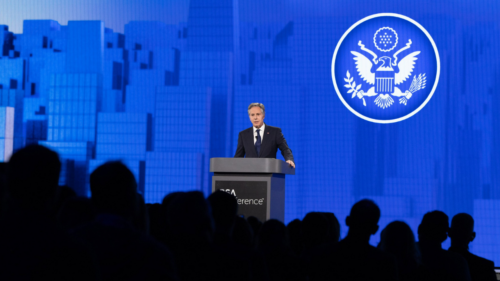
Secretary of State Antony Blinken on Monday unveiled a new National Cybersecurity Strategy Implementation Plan (NCSIP) while speaking at a cybersecurity conference in San Francisco. While the strategy does not directly mention China, the blueprint is widely understood to be the administration’s response to cyber threats from both China and Russia.
On April 16, the National Bureau of Statistics (NBS) released first quarter economic data that paints a mixed picture for China’s 2024 economic growth. While the official NBS views the data as portraying good momentum for China’s economic rebound, many independent analysts noted that seasonal demand increases in January and February around the annual Chinese New Year holiday drove up the headline demand figures, and that March data on property investment, retail sales, and overall industrial output show signs of deceleration.
In early March, China launched a campaign to encourage businesses to upgrade their industrial equipment and consumers to trade-in their outdated goods, which includes automobiles and household appliances. The campaign is intended to address several priorities at once, including boosting consumption, raising business confidence, and improving China’s manufacturing capabilities.
A newly approved bill from the House Ways and Means Committee has reignited the discussion over a popular trade provision utilized by those who sell and ship their goods to the United States, especially by companies in China. The de minimis rule allows products valued under $800 to be expedited at US ports without paying tariffs that would otherwise be applied.
On Wednesday, the Treasury Department and State Department announced nearly 300 new sanctions aimed at entities circumventing US sanctions on Russia. The sanctioned entities include several Chinese firms.