Progress on US-China Commitments, USCC Publishes Annual Report
This week, the United States and China continued to take action on commitments made during the leaders’ meeting in October.


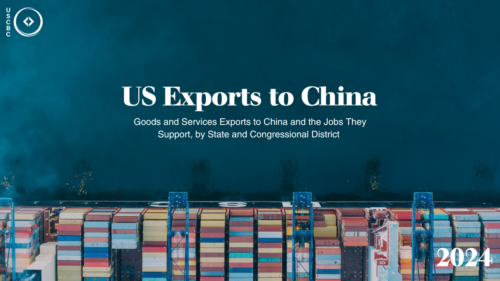
This report explores the latest comprehensive data available for exports of both US goods (2023) and services (2022) to China as well as for the jobs they support.
On Wednesday, President Joe Biden called on the Office of the United States Trade Representative (USTR) to triple the Section 301 tariff rate on Chinese steel and aluminum to 22.5 percent, up from a current average of 7.5 percent. The increased Section 301 tariffs would be added on top of an import’s regular duty rate and any existing antidumping and countervailing duties.
The Biden administration has characterized its strategy for regulating commerce with China as a “small-yard, high-fence” approach, saying it will promote what it can and protect what it must. Under this framework, access to certain dual use technologies and services is controlled, while other, non-sensitive areas are not restricted, tariffs notwithstanding.
The US-China Commercial Issues Working Group (CIWG), the first commercial bilateral mechanism between the United States and China in seven years, recently concluded its first meeting, which took place in Washington, DC. The mechanism was created last fall, during talks between Commerce Secretary Gina Raimondo and Commerce Minister Wang Wentao, as a platform for the private sector to raise specific issues with both governments.
China has seen several high-level personnel changes at the central and provincial levels over the last few months. On February 7, Wu Qing (吴清), previously the deputy party chief of Shanghai, assumed the role of chairman of the China Securities Regulatory Commission (CSRC), succeeding Yi Huiman (易会满).
Chinese state planners have long recognized the imperative of transitioning toward a consumption-driven economy for long-term stability. But a deflationary domestic economy, low business and consumer confidence following COVID-19, geopolitical tensions, and supply chain disruptions have stifled spending.
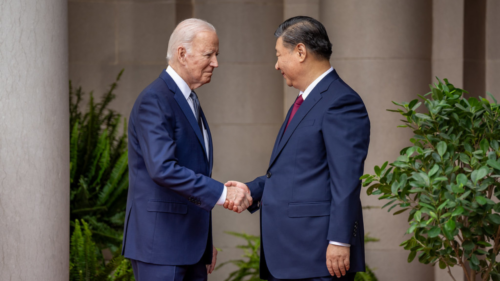
On Tuesday, President Joe Biden and President Xi Jinping held their sixth conversation since Biden took office, building upon discussions from their summit in San Francisco last November. According to the US readout, Biden touched on US export controls, Taiwan, the South China Sea, and Russia, among other issues important to US economic and national security.
China’s leadership is ramping up engagement with foreign business executives as the country works to increase foreign direct investment, which reached a 30-year low in 2023 amid poor sentiment from the business community driven by concerns over weak demand, overcapacity, geopolitical uncertainty, and long-standing regulatory issues.