Progress on US-China Commitments, USCC Publishes Annual Report
This week, the United States and China continued to take action on commitments made during the leaders’ meeting in October.


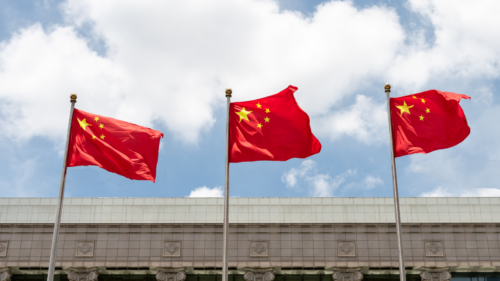
As members of the Chinese Communist Party’s Central Committee convened for the Third Plenum in Beijing this week, China’s National Bureau of Statistics (NBS) released economic data for the second quarter of 2024, which paints a picture of imbalanced growth.
With more than 80 percent of Americans holding an unfavorable view toward China according to the Pew Research Center, President Joe Biden and former President Donald Trump are vying to convince voters that their approach to managing the US-China relationship is the right one.
China saw several senior personnel changes at the central and provincial levels ahead of the Third Plenum, which took place this week and is scheduled to wrap up today.
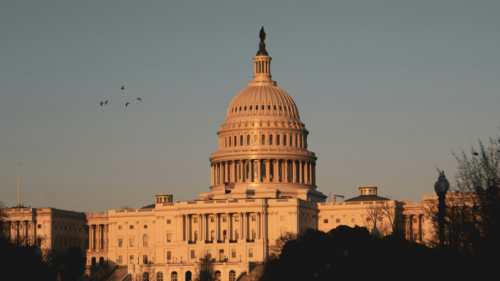
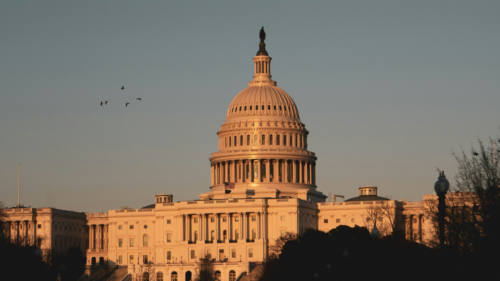
House Speaker Mike Johnson (R-LA) on Monday confirmed rumors that the House plans to vote on a series of highly-anticipated China legislation this fall. Speaking at the Hudson Institute, Johnson specifically mentioned bringing the BIOSECURE Act, the End China’s De Minimis Abuse Act, a provision on restricting US outbound investment to China, and a sanctions package targeting Chinese entities supporting Russia’s aggression in Ukraine to a floor vote.
Over the past few months, US Patent and Trademark Office Director Kathi Vidal made a visit to China, China’s IP authorities announced a series of work plans on enhancing IP protection through administrative measures, and judicial authorities released a number of “typical cases” to set referable rulings and guidelines for future judicial proceedings.
China continues to inject capital into its high-tech sector. Investments are focused on both top-down and bottom-up innovation. From the top, various State Council ministries are redirecting the country’s capital resources into key sectors, with a renewed focus on quality and performance.
From July 15 to 18, China’s Central Committee will convene in Beijing for its third plenum since the current committee was elected in 2022. Plenums are essential events on China’s political calendar, with President Xi Jinping serving as the presiding officer.
On June 12, the European Commission announced provisional countervailing duties of up to 38.1 percent on Chinese-made electric vehicles (EVs) beginning July 4. The commission’s announcement followed a May 14 announcement from the Office of the United States Trade Representative that it would be increasing Section 301 tariffs on Chinese-made EVs from 25 percent to 100 percent beginning August 1.
International travelers are returning to China. In Q1 2024, there was a 305 percent year-on-year increase in foreign national inflows—a trend spurred by loosened entry restrictions and efforts to boost the economy since the Chinese government lifted its zero-COVID policy in late 2022.
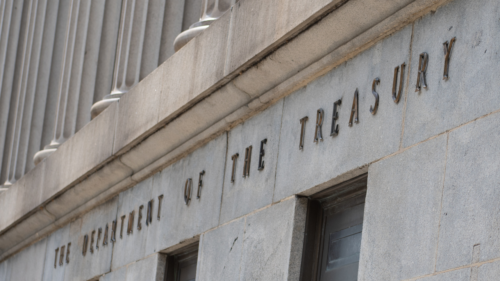
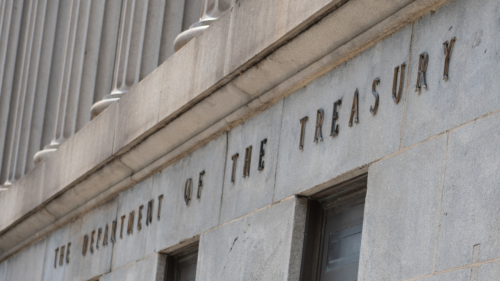
The Treasury Department last Friday issued a highly anticipated notice of proposed rulemaking (NPRM) to curb US capital flows to sensitive, dual-use technologies in China. Once implemented, the rule will enact tighter regulations for US corporations and investors that seek to conduct investment activities in China in a defined range of technologies, including semiconductors, quantum computing, and artificial intelligence (AI).